“STOP repression in Catalonia!”
On Tuesday, the 10 Downing Street (London) was the location for a protest against police repression and to defend people’s right to choose in Catalonia, after the attempt to celebrate a referendum last Sunday.
All the blog posts published in English.
On Tuesday, the 10 Downing Street (London) was the location for a protest against police repression and to defend people’s right to choose in Catalonia, after the attempt to celebrate a referendum last Sunday.
Catalan expats organised a demonstration in support of the independence of Catalonia and against the police brutality lived during the referendum for independence.
In the Pride Parade in London, last Saturday, July 8th 2017, associations and advocacy groups for the LGBTQ+ community marched along the biggest corporations and any major brand in the UK.
On February 4th, 2017, London’s Downing Street, where the official residence and office for the British Prime Minister Theresa May is, was the location chosen by human rights and political activists to end a protest that started at U.S. Embassy in Grosvenor Square.
Women and allies around the world marched today Saturday, January 21st 2017, for gender equality and human rights, on the awakening of the first day for Donald Trump’s presidency of the United States.
Tubecon, in Helsinki (Finland), is the biggest YouTube related event in Scandinavia. Read more about it and the success of YouTube in Finland in my article for the Foreign Correspondents’ Programme.
Kids don’t watch TV anymore; they watch YouTube instead. This statement is becoming common in many countries worldwide and Finland is not an exception: recent data show that 18% of Finns between 15 and 39 years of age watch YouTube every day.
The (Finnish) national YouTube community is in a continuous growth: 357 YouTube channels have more than 10,000 subscribers and 45 channels have got over 100,000 subscribers. Most of these channels are Finnish-speaking. Victor Potrel from YouTube HQ in London said that such a large community for a language of 5.5 million speakers is a unique phenomenon for the online video platform.
These channels represent a wide offer of diverse content. Video creators are developing a strong engagement with their audiences both through their videos and through social media profiles. “Is like meeting a friend”, Potrel said.
This strong engagement is what made Tubecon a reality: in 2013, some of the most successful Finnish YouTube creators were setting regular meet-ups with their fans, but when attendance to these informal gatherings was reaching 2,000 people, they realized that there is a need for a more structured event allowing a larger capacity. Tubecon was on the making.
Continue reading “TUBECON 2015: The idols of Finnish teenagers are now on YouTube”
The foundation of MTV as a “mood enhancer” and the replacement of music videos for reality TV-shows in the recent years.
In contemporary societies, the media is not only considered an entertainment or a source of information, it is part of human life and how humans socialize.
The media that people consume says a lot of who they are. For instance, political views are fairly reflected on the political views of the media outlets consumed. Media also influence interactions of humans on their daily activities. Think, for example, on how much of the topics on your daily conversations with friends or acquaintances are related to media or on how media influences current debates on social and political issues. As much as media seems inseparable from people’s life, it’s closely related to contemporary history, which is fairly reflected in the media.
Mass media and mass popular culture is assumed to be commercially motivated and is difficult to determine whether it reflects audience interest or intentionally shapes and manipulates them, according to the interest of those who produce it.
Celebrities are the myths of this time and many memories people has come from a song, a movie or even a TV channel.
Traditionally, aspects such as religion, family or work defined people’s identities, but this has gone in favor of different aspects such as leisure activities, consumer lifestyles and, specially, mass media. The media is partly responsible, furthermore, on how leisure or consumer lifestyles are defined. It is a big part of people’s identity, with several commonalities produced from shared experiences through mass media. It also defines collective imagery and memories: celebrities from the media are the myths of this time and many memories people has come from a song, a movie or even a TV channel, all different kinds of media. Continue reading “I WANT MY MTV: Where did the “M” for “music” go?”
Critical analysis over the processes of production and reception of experimental documentaries.
The video installation Script, by Brazilian artist Veridiana Zurita, was featured in Possible Futures (October 10-26th, 2013), the last activity of VOORUIT100, a six- month celebration for the 100th anniversary of Vooruit, the historic building in the city of Ghent (Belgium), currently used as a music venue, cafeteria and arts centre.
Script explores the relations between two women, a mother and a daughter. The daughter is Zurita and her mother is a psychoanalyst, based in Sao Paolo (Brazil).
The project is based in the meeting of these two women during two weeks, when they both recorded themselves on video while playing their social, familiar and affective roles, exploring themselves and the relation to the other. Continue reading “Experimental Documentary: from the script to the video blog”
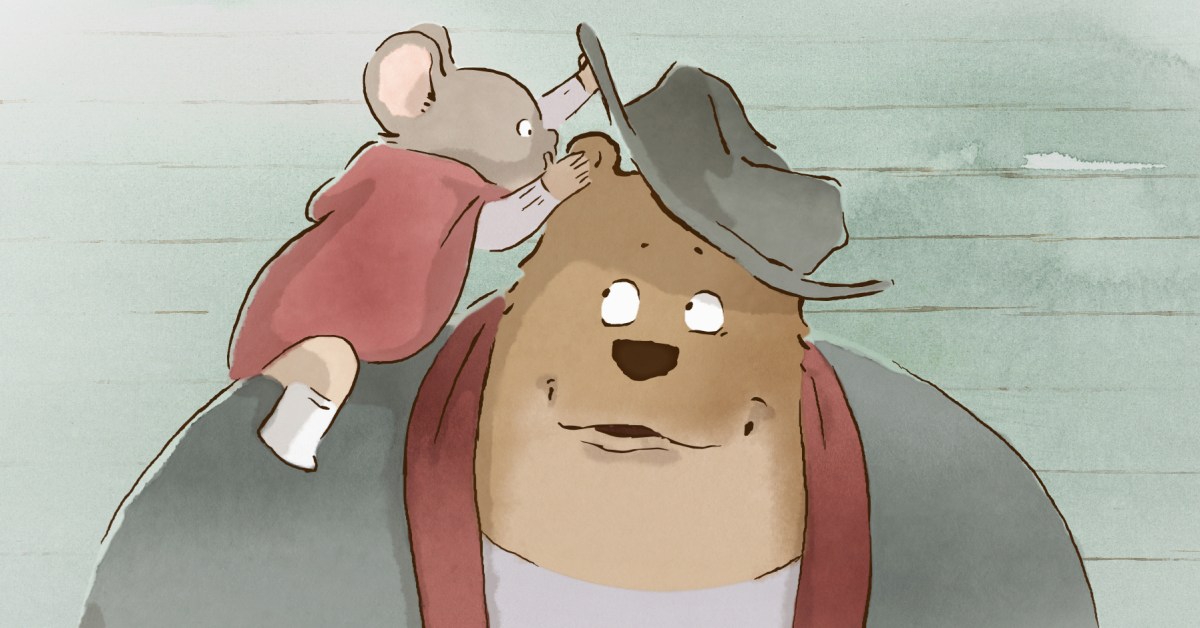
Movie review of the French animated comedy-drama film Ernest et Célestine (2012), based on children’s books by the Belgian author and illustrator Gabrielle Vincent.
This is not the first time that anthropomorphized animals are used to show the glories and miseries of our society. The technique is as old as humanity and is tied close to a little mouse that became the icon for a major animation film company (and for the 20th century in general) or even further, with the earliest fairy tales.
In the traditionally crafted animated film Ernest & Célestine, it is shown through two main characters, a little mouse and a big bear, outsiders of their respective societies, living in parallel worlds on the surface and in the underground.
Participatory feature story where I share how a group of international and exchange students at Thompson Rivers University learned the most Canadian thing you can learn: how to play hockey.
We could barely balance standing on our skates: some of us had never skated before, and many of us didn’t know how to stop. For us, ice hockey was an exotic game. Even though we were familiar with other forms of hockey – roller or field – they were not the most popular sports in our home countries, not like it is in Canada.
The activity was organized by the International Students Activity Program (ISAP) of TRU World at Thompson Rivers University, and it had a group of international and exchange students, inexperienced or novices at ice hockey, getting together to try out the game.
“We know what we have to offer,” said Jilian Folk, ISAP coordinator since October 2012. “You can go out there and explore different things you may not feel comfortable doing on your own. I don’t know if you would go out there and rent hockey equipment, find someone to coach you… so I think this activity is a really good opportunity for you guys.”
As an exchange student at TRU from Barcelona (Spain), I am often asked about Barça, my hometown soccer team, but I never cared much about soccer. Indeed, I’m not interested in sports, but for me, as for many students who signed up, this activity was a good chance to get deeply involved in a game that is rooted in the Canadian culture.
“Hockey dominates Canadian culture. It’s not that every Canadian loves hockey but it is something that connects us, much like football (soccer) is in Spain,” said Craig Engleson, manager of activities and events at TRU World. “Not every Spanish person loves soccer, but there is a common language, memories that are involved with that… It’s the same with hockey here. It’s common.”
This was the second year ISAP organized the winter semester activity.
Our little big challenge was to play a brief friendly game during the intermission, after the second period in the match between the Kamloops Blazers and the Vancouver Giants on Feb. 27 at the Interior Savings Centre (Kamloops), in front of more than 5,000 people. To learn how to play, we had three training sessions – Feb 12, 19 and 22 – at which we learned the basic rules of the game, what a puck is and how to control it.
This is the story of us, inexpert hockey players trying to do our best just for the fun of it. Continue reading “The Little Big Challenge: TRU’s Inexpert International Hockey Team”