Domestic videos have gone through a quiet but significant transformation on recent decades, both technological and social.
Not so long ago, these recordings of celebrations and family trips lived only in private collections, recorded on analog formats that were rarely revisited and built up dust on shelves.
That started to change with the technologies to upload and watch video online, particularly with the foundation of YouTube in 2005.
Fast forward to a couple decades later and now domestic videos are produced and shared instantly across platforms. We have slowly got used to watching streams of content from friends and family, but also from strangers.
Recording, sharing and watching domestic videos is now constant, embedded in daily life, and often public by default.
At the same time, the volume of content, combined with the fragility of platform-based archives, raises new questions about what is kept, what is lost, and how meaning is constructed over time.
The origins of domestic cinema
Over Christmas last year, I visited an exhibition at CaixaForum in Barcelona titled [REC]UERDOS. La vida a través del cine doméstico. It’s a play on words with the ‘REC’ button and the Spanish word for “Memories” (Recuerdos) followed by the title “Life through domestic cinema.”
The exhibition explored the technical evolutions of domestic cinema, going from classic film cameras to compact digital video cameras, GoPros, and everything in between, until we got to the video recording capabilities of small devices we keep in our pockets.
It also showed the evolution in terms of content, from the poorly recorded domestic videos of birthdays and family celebrations that nobody but their protagonists would sit through to re-watch, to the short vertical videos that we scroll throug, that, in a way, show us a glimpse of what society is and does today. Yes, these are all different but valid examples of domestic cinema.
I continued to think about this when I saw the work of the filmmaker Nora Rosenthal at OBORO, an art centre in Montreal.
Her work made me think about the truthfulness of the domestic videos we present to the world, how much of that is documenting reality and how much is performing it?
And do we think of the long-term value of the videos we make with our phone?
When home video was still private
Before everything moved online, video was largely domestic. Birthdays, weddings, holidays, everyday moments recorded for personal use. These recordings were informal, subjective, and not intended for wide distribution.
Yet they documented aspects of life that rarely appeared elsewhere. Small details, environments, and behaviours that, collectively, offered a form of social record.
These were not meant to be documentaries, the goal was not journalistic, but the outcome often carried value.
The instinct to record meaningful moments existed long before platforms made it visible to a broader audience of strangers, and the goal was often to preserve a record of how societies lived and socialized at the time.
Would that be lost now?
From private archives to public feeds
The transition from physical formats to digital platforms marked a shift not only in technology, but in audience.
YouTube, Facebook, Instagram or TikTok normalized the idea of sharing personal footage publicly. Smartphones made recording constant, and vertical video made it native to social environments.
As a result, spontaneous recording that once stayed private are now often the first layer of public documentation.
Old formats reflect a cultural saturation
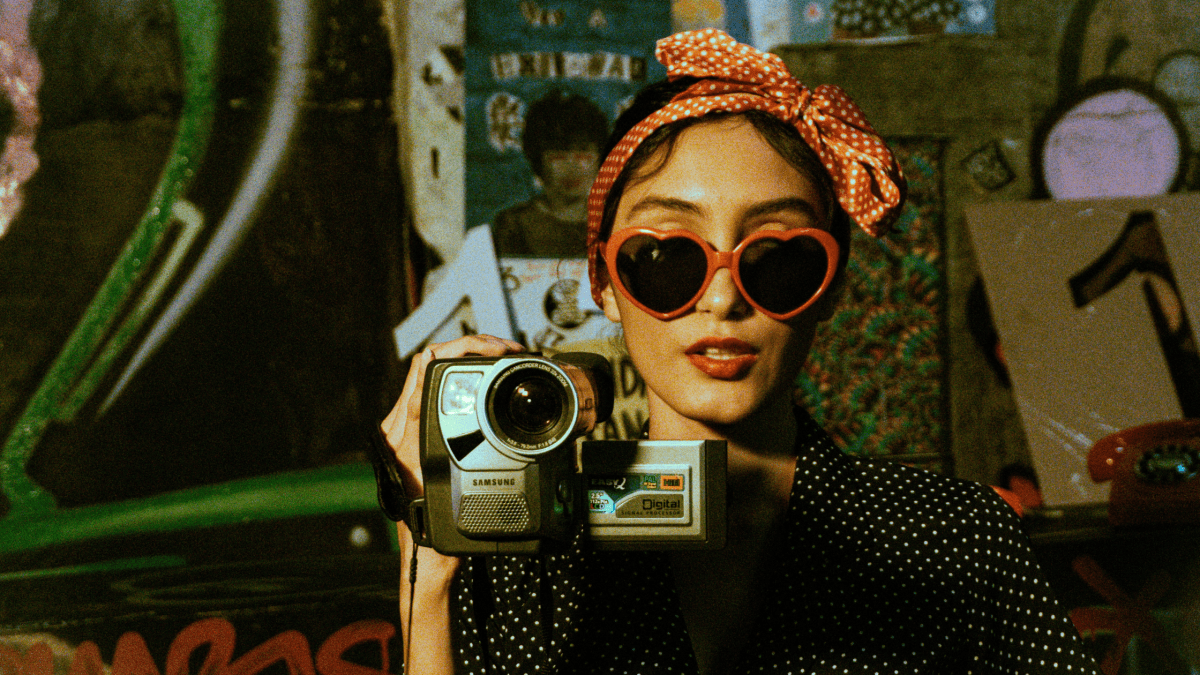
There is also a countertrend. Younger generations have started to revisit older formats, from disposable film cameras to early 2000s digital cameras, often for their texture as much as their function.
The slightly grainy, imperfect look has become a visual choice rather than a technical limitation.
Part of this is aesthetic nostalgia, a preference for images that feel less polished and more “real” in a different way than algorithmically optimized content. It is also a reaction against the constant visibility and permanence of contemporary digital life.
Using older or less connected devices can feel like a way to slow things down, even if only symbolically. This return to analog or early digital tools is about creating distance from the present.
In a media environment where everything is immediately shareable, searchable, and optimised, the appeal of something finite, offline, and slightly resistant to circulation becomes more understandable.
Implications for journalism
Eyewitness footage has become a common entry point for news coverage rather than a supplementary element. Companies like Storyful made their entire business-model out of that and employ many journalists curating user-generated content from around the world.
The widespread use of everyday video has influenced journalism in other ways. Domestic videos in the form of vlogs have influenced the production of reporting from a first-person viewpoint.
Audiences are increasingly accustomed to experiencing events from within, which makes traditional, distant forms of storytelling feel less immediate, particularly on social media.
Timing has also changed. The gap between event and publication has narrowed significantly. Content circulates quickly, often without context, reinforcing the role of journalism in verification and explanation.
Expectations around documentation have also evolved.
Short clips may lack depth, but they capture immediacy, emotion, and atmosphere in ways that resonate with audiences.
This is not entirely new. In 2013, I wrote an essay on experimental documentary that questioned how fragmented and non-linear forms of domestic video can convey meaning effectively but also easily mislead the public presenting as natural and unscripted something that was intentionally produced and edited.
The challenge of abundance
If domestic videos were once something private and with limited visibility, that is not the case anymore, quite the opposite.
Open any video platform and there is an overwhelming volume of content, both amateur and professional, with countless clips competing for attention.
Footage can surface quickly, but it can also be displaced just as rapidly.
For journalists, access to content is no longer the constraint, but curation is. Identifying relevant material, verifying its authenticity, and providing context are now central to the journalistic process.
Not every piece of content warrants coverage, but the ability to recognize what does is increasingly valuable.
And artificial intelligence adds further complexity. It can assist in organizing content, but raises concerns around manipulation and authenticity, reinforcing the importance of editorial oversight.
Archiving without physical support
Digital video is easy to distribute, but the disappearance of physical media, videos that can be archived and watched in years to come, remains a challenge.
Home videos once existed as tangible objects. While they could be lost or degraded, they were at least locatable.
The videos you watch today are largely platform-dependent. They exist within ecosystems shaped by business models, policies, and technological changes. They might exist on the device of the user who produced them, but they can be removed easily, accounts can disappear, and formats can become obsolete.
Some organizations are beginning to address this by treating digital-first content as archival material.
The objective is not to preserve everything, but to maintain representative records of how events were documented and communicated.
The future of domestic videos
The vertical videos in our social media feeds are not just a format, but they are also a continuation of earlier practices that speak to how we record and consume video today. Like early domestic films and home video later on, they all reflect individual perspectives and captures moments as they are experienced.
Journalists could replicate these formats, but they are better served building on them. Providing context, connecting disparate elements, and offering clarity remain essential functions.
While the rise of short-form video is often framed as a disruption, like digital video cameras disrupted film, it is more accurately understood as an evolution.
The tools have changed, and the volume and speed have increased significantly. However, the underlying impulse to record, document, and make sense of events remains consistent throughout society.
The challenge lies in navigating this environment. Managing abundance, ensuring accuracy, and preserving meaningful content are integral parts of telling the stories of the videos we record.


One thought on “What happens to the videos we record?”