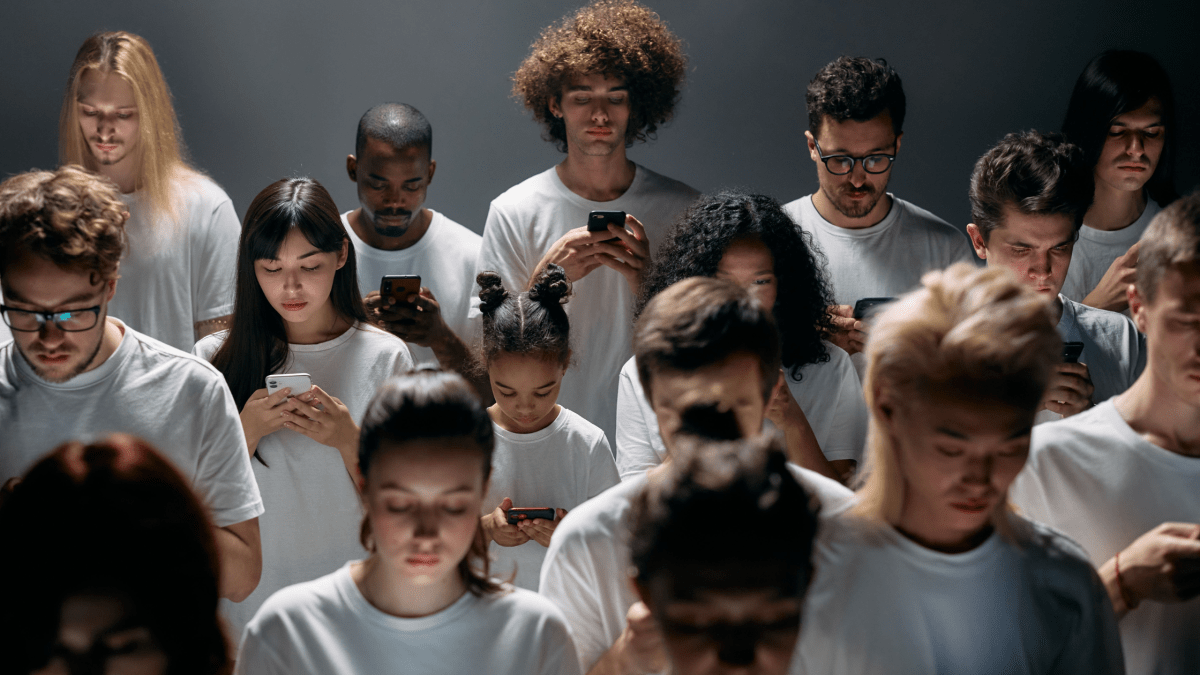
The sources that defined referral traffic online used to be clearer just a few months ago. Search brought people looking for something specific, either evergreen or breaking; successful social media posts could determine clear boosts in page views and direct traffic was a sign of brand recognition, even better when it was regular and loyal visitors.
Artificial intelligence and other algorithmic changes from tech companies have messed with the way we discover and consume content, with some sources of external traffic heavily hit while others have managed to survive or even thrive.
People are still consuming content, probably more than ever, but the way they get to it is less linear and, in many cases, harder to track.
As the “Ask Google” habit shapeshifts to “Ask the Chat” (ChatGPT), how much has AI changed how we distribute and discover content online?
AI uses you but doesn’t return traffic
Users who used to “Google” questions now “ask the chat,” AI-powered chatbots that, in a matter of seconds, put together short summaries with a response that is not always accurate. The mix of two competing sources of information can lead to a rather confusing and misleading result.
In order to fact check, sources of information get often cited with a link. But how many users do click on these links, actually?
According to Chartbeat’s report on the new traffic landscape, the page views coming from results of services like OpenAI’s ChatGPT or Anthropic’s Claude account for less than one per cent of page views.
The small percentage of users who click on the information don’t stay for long, especially when it comes to news websites, less so for home and gardening, or health.
Search is still relevant but has changed
Google is showing no signs of losing its dominance as a search engine, it still is one of the most most important ways people find content, but in order to stay relevant in the everything-must-be-AI age, the results generated by artificial intelligence are taking a larger relevance in the search features, to the detriment of organic search results users clicked on.
In early 2026, the Reuters Institute for the Study of Journalism reported that organic traffic from Google search results was down 33 per cent worldwide.
Smaller publishers are getting hit the hardest. Data from Charbeat shows the decline in traffic from search represented a 22 per cent decrease for large publications, but 47 per cent for medium publications and 60 per cent for small publications.
Heavily investing on a SEO strategy as a small publisher is becoming increasingly difficult. Instead, the recommended focus is on strengthening internal traffic.
Increase retention
Keeping audiences on your site is becoming just as important as getting them there in the first place. A lot of it comes down to how clearly your content is structured and how easily people can move through it once they arrive.
What tends to work better these days is content that is clear, specific and structured in a way that is easy to scan and understand.
Connecting stories through related links, topic pages, and follow-up reading keeps audience engaged and makes past evergreen content still relevant. Evergreen content that stays relevant over time is particularly useful to keep internal traffic flowing consistently throughout the site.
Social media is still alive?
In the summer of 2023, as Bill C-18 was about to be approved, consequently limiting the access to news content on Facebook and Instagram, I called it: Social media for news is dead.
Time has passed and I stand for what I said. Don’t get me wrong, I love social media, it’s my favourite way to waste my time, but its capacity to generate referral traffic is going downhill with no brakes, particularly on platforms like Twitter (X), losing quality and relevancy by the minute as it gets filled by spam and AI slop with no humanity.
Everything is algorithm-driven and asynchronous now, losing the power social media had to circulate breaking news in a timely manner as they happened.
How many times in the past week did you get a post on you feed about something that happened days, weeks, months ago, and is no longer relevant?
However, social media is still great for reach, and for brand building, to create an identity users recognize, like, and follow through pro-actively, visiting your website or subscribing to a newsletter.
It is also a way to extend the lifespan of your content, but building your entire distribution strategy around social media these days is foolish.
The light on dark social
A growing part of referral traffic is now happening in places that are hard to measure and track. Messaging apps, private group chats or emails, even screenshots that navigate through messages and posts, untraceable, now play a big role in how stories are discovered.
This is often called ‘dark social,’ because it is largely invisible in analytics. But, ironically, it could actually be a source of light in your distribution strategy.
It’s about trust and interpersonal relationships not volume. People are more likely to share content directly with someone they know than post it publicly.
That means recommendations inside these ‘dark’ spaces can carry more weight than algorithmic reach ever will, even if they are harder to track .
Content that is easy to share, copy, and explain tends to perform better in these environments, even if the referral path is never fully visible to those that published it originally.
What can you actually do about it?
Things are changing by the minute, it’s exhausting, but the same way you cannot control the wind but can direct the sail, you cannot control how platforms behave under the everything-must-be-AI spaces, you can’t blame users for how convenient it is to get the answer they were looking for through a short summary, but you can control how your content works within that environment to make the most of it:
Make your content easy to understand
Clear structure, strong headlines, and direct answers go a long way.
Think about what happens after the click
Related stories and internal links help you get more value from every visit.
Build direct relationships
Newsletters, alerts, and regular formats matter.
Do not rely on one source of traffic
You are more likely to fail when your audience comes from a single platform.
The new reality
Referral traffic is not disappearing but is becoming less visible and more spread out. AI is now a growing part of the discoverability mix, along search, social media algorithms, direct traffic, alerts, newsletters and other discovery tools.
With that in mind, remember you are writing for a system where content might be read, summarized, shared, or referenced before anyone actually lands on your page.
Clarity and strong storytelling are more important than ever.
Build a loyal audience that gets to your content on a regular basis, share it with their peers and advocate for you, making your audience grow organically.
Stories still have to hold up when people find them, one way or another.


