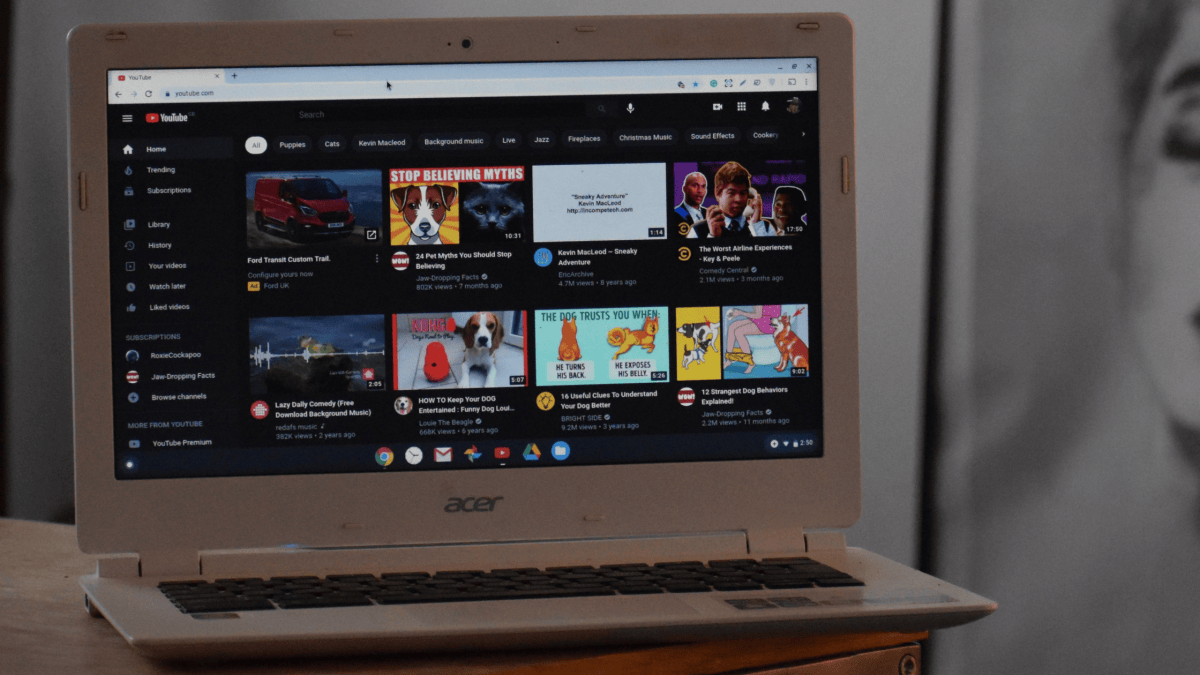
Out of all the blog posts sharing my expertise on YouTube channel management and optimisation that I have published here since 2019, there’s one that still drives a lot of traffic to this day. It’s the one where I share best practices to create eye-catching YouTube thumbnails.
I love all my blog posts equally, but I’m particularly proud of that one. The recommendations I share still hold true and there are elements on it, like a graphic to show the recommended size of a YouTube thumbnail and the green and red zones to structure visual elements on it, that still apply today. According to my web analytics, that blog post has reached far and wide online.
Fun fact: Google Search Console shows me this blog post appears in many search results just because of the use of the word porn.
If you are new here, I’m a journalist and digital media editor with a lot of experience managing and optimising video content for YouTube.
I’ve worked with musicians, filmmakers, journalists, dancers, music labels, festivals, distributors, news outlets, non-profit organizations… Name it, I’ve probably worked on a video about it. I did a webinar once, too.
In this work, there’s a browser extension I use a lot, it’s called vidIQ. I use it because it surfaces the metadata of your videos, and videos from others, so you can find the best keywords for your video, for example. Nowadays, it relies heavily on artificial intelligence to offer a series of AI-powered features. Among them, there’s the one I want to talk about today.
YouTube thumbnails created by AI
Once upon a time, I was uploading a new video on YouTube, and vidIQ was heavily invested in showing new features around the field where you upload a customized thumbnail.
I knew about the new AI features but, to be honest, I was ignoring them. I know the tool, I know the things I use it for, I ignore the ones I don’t need. But a bright blue button was tempting me to generate a new image next to the thumbnail I had already prepared. I clicked on it.
No prompt was required. All it did was pick up all the information it got from the headline and the description, also scan all the visual information from the video itself. If there was a face on it, it was going to use it.
In about a minute or less, it generated an image that checked most of the boxes for best practices to create a YouTube thumbnail (not all) but, at the same time, looked incredibly average and lacked personality.
VidIQ gives a score to all the elements surrounding a video – like the title, description, thumbnail, keywords, etc. – and you generally should aim for the highest scores, which also show in green, if that wasn’t clear enough.
The thumbnail AI generated in a minute might have a higher score than the one I spent time composing on Canva or Photoshop, but at least the latter is mine.
Whatever happened to channel branding
I’ve been tempted to try the A/B test feature on YouTube to see how a thumbnail I created performs against one generated by AI.
Sadly, my professional instinct tells me that the AI-generated thumbnails would have a higher click-through rate (CTR) than the ones I made, maybe that’s why I don’t want to do it, I don’t want to accept the defeat.
My opposition to YouTube thumbnails generated by artificial intelligence has nothing to do with marketing and performance and everything to do with my personal aesthetic opinion.
Since they are generated by a set of machines that are trained with a vast set of visual data from the best-performing videos on YouTube, they try to imitate them: bold, big text, high contrast colours and expressive close-up faces that are so heavily edited they look unreal. A known formula.
If all the channels on YouTube start developing their visual identity out of the same set of visual data, they all start looking the same.
How can a YouTube channel stand out?
The answer is one of the rules in YouTube’s own playbook of best practices that these AI features seem to forget: creating a consistent visual branding.
Of all the thumbnails generated by AI that I’ve seen, none follows a unique and consistent branding. They all look average.
One of the main goals for YouTube thumbnails is to make your videos easily recognizable in search results, related videos or anywhere else in the platform’s ecosystem.
A consistent and recognizable set of features such as colours, logos and layouts, helps identify the videos from your channel and build a loyal audience.
And this is where I think optimisation becomes counterproductive.
There is a difference between making a thumbnail perform well and making a thumbnail belong to your channel. Ideally, you want both. But if the tools you use to optimise your thumbnails are trained to reproduce the visual characteristics that already perform well across YouTube, you are essentially asking them to do what is already everywhere.
That might help you win a click today, but not the recognition or long-term engagement a sustainable channel requires.
A successful YouTube channel is not just a collection of videos that perform well individually. It is part of a larget set that users can recognise, remember and choose to watch over and over. This becomes even more important as the amount of content competing for our attention grows.
AI makes it possible for everyone to produce an optimised thumbnail in a few seconds, but then optimisation itself stops being an advantage.
When everyone follows the same formula, it becomes background noise. And when anyone can generate a thumbnail designed to get clicks, the channels people remember will be the ones that have something distinctive to say, show and look like.


